- Sand Box: Construct Regional Seismicity Models Using Geodetic Strain Rate
- Technical Details: Constructing Regional Seismicity Using Geodetic Data
Geodetic data provides valuable information on how a region is being strained and its potential to experience earthquakes. Over the last few decades, there have been concerted efforts to develop databases of global surface strain rates, aiming to assess regional earthquake hazards. Figure 1 shows a map of regional strain rates for Europe, as formulated by UNAVCO and GEM; see the document for more details.
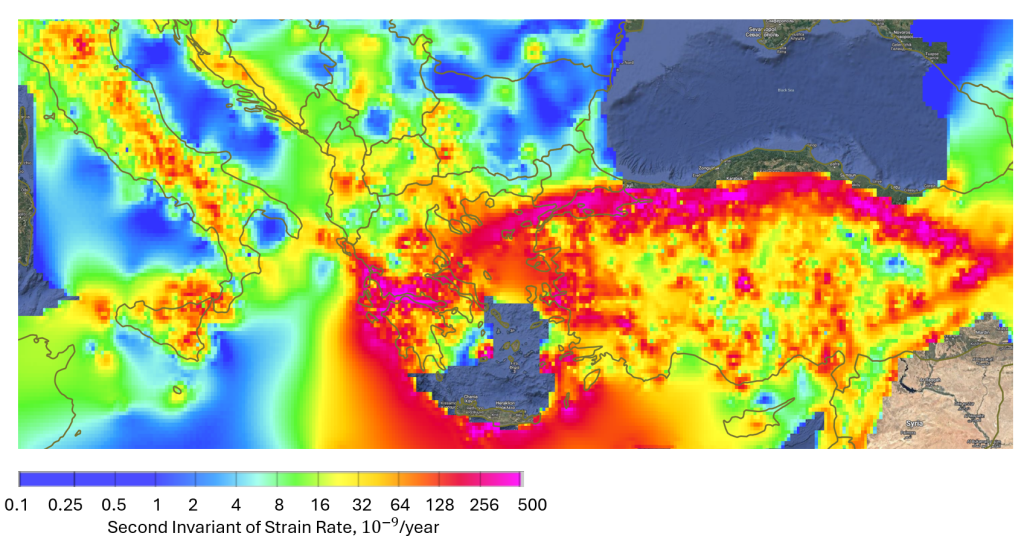
Figure 1. Geodetic strain rate map for Europe, created by UNAVCO and GEM
Many different studies have shown a strong correlation between the spatial distribution of earthquakes and surface strain rates. However, there are challenges in reliably interpreting regional surface strain rates to regional seismicity for hazard analysis, see the document link for more information. In spite of the challenges, most recent regional seismicity models use geodetic data to complement geologic, instrumental, and historic earthquake data to construct more robust seismicity models.
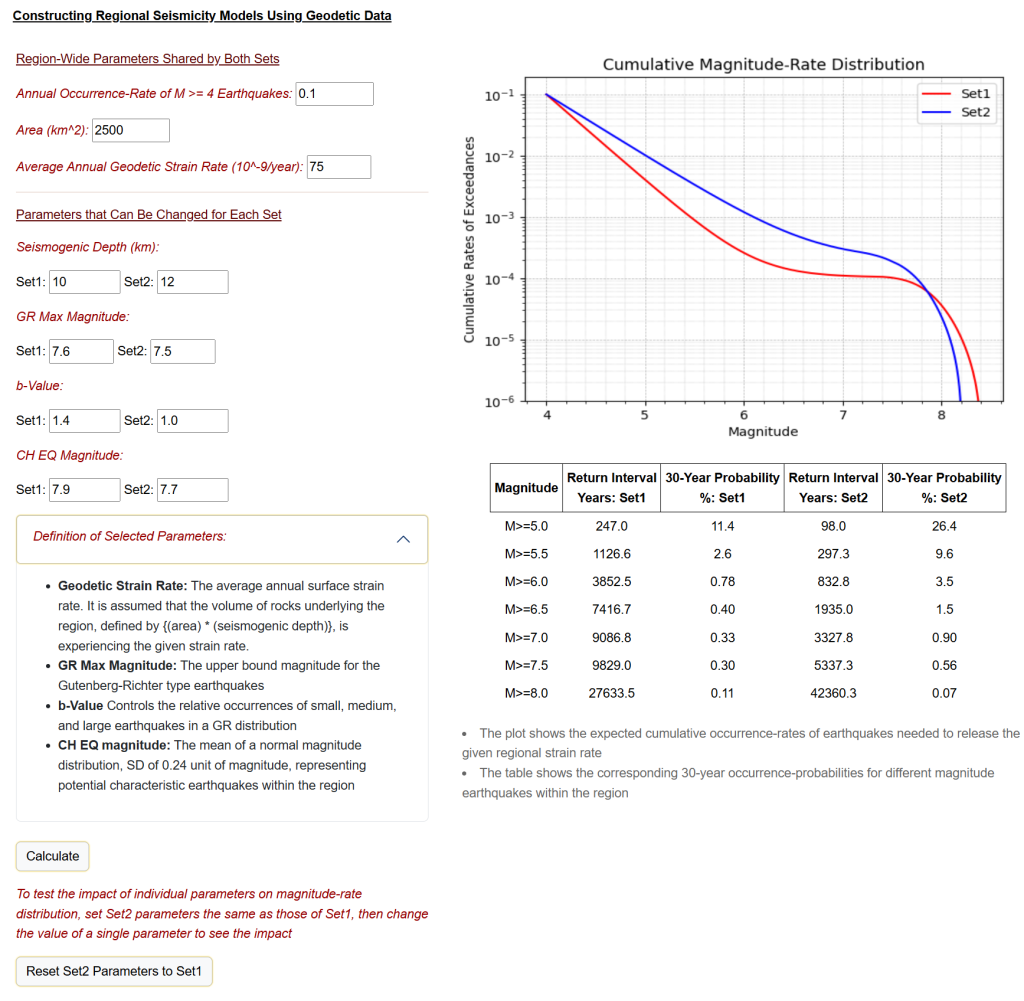
This page and the Sandbox are designed to discuss the hazard implications of geodetic data and to provide users a practical tool for constructing and evaluating regional seismicity models using geodetic strain rates.
$$\dot{\epsilon_{ij}}$$