Skip to content
Earthquake Information

Earthquake Information

wiki.geodialog.com

  • Home
  • About
  • Glossary
  • Categories
    • Seismicity
    • Ground Motion
    • Hazard
    • SandBox
    • Earthquakes
    • US
    • Geodetic
    • Glossary
    • Tectonics
    • Subduction
  • Analytic Site
  • Toggle search form

Author: geoeditor

Ground Motion Analysis for User-Defined Earthquake Scenarios
Posted on May 5, 2025April 25, 2026 By geoeditor
Ground Motion Analysis for User-Defined Earthquake Scenarios

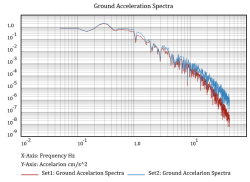
The following briefly discusses conducting ground motion analysis for a user-defined earthquake scenario. This page is reached after a user registers a fault database with the program and defines an earthquake scenario using a combination of the registered segments. The GM analysis program and the page are designed to conduct ground motion for sites defined…

Read More “Ground Motion Analysis for User-Defined Earthquake Scenarios” »
Ground Motion

Interactive Modules

Posted on February 18, 2025April 25, 2026 By geoeditor
  • Sand Box: Construct and Evaluate Magnitude-Rate Distribution Scenarios
    • For details, see Building Seismicity Models
  • Sand Box: Construct Regional Seismicity Models Using Geodetic Data
    • For details, see Building Seismicity Models Based on Geodetic Data
  • Sand Box: Hazard Analysis for Earthquakes on Virtual Faults
    • For details, see Earthquake Hazard Analysis
  • Sand Box: Ground Motion & Response Spectral Analysis
    • For details, see Earthquake Simulation and Response Spectral Analysis
  • Sand Box: Search/Plot Faults in Western US to Get Details
    • For details, see USGS Seismicity Model: Faults in the Western US
  • Sand Box: Search/Plot Earthquake Scenarios to Get Details and Conduct Ground Motion Analysis
    • For details, see USGS Seismicity Model: Earthquake Scenarios for the Western US
  • Sand Box: Create a User-Defined Crustal Fault Database
    • For details, see User-Based Global Earthquake Scenarios for Ground Motion Analysis
  • Sand Box: Construct Earthquake Scenarios and Conduct Ground Motion Analysis
    • For details, see User-Based Global Earthquake Scenarios for Ground Motion Analysis

SandBox

Glossary List

Posted on February 14, 2025April 25, 2026 By geoeditor

[glossary-terms order=”asc”]

Glossary

Ground Motion Components

Posted on February 10, 2025April 25, 2026 By geoeditor
Ground Motion Components

Following are brief discussions on the functional forms of items in equation 1 of Earthquake Ground Motion and Response Spectral Analysis Source Function \(F_{src}(M_0,f)\): The far field, i.e. far enough from the rupture area that the rupture details can be characterized in a simple functional form, source displacement spectrum is often formulated as $$F_{src}=\frac{C*M_0}{1+{(f/f_0)}^2}…(2)$$ where…

Read More “Ground Motion Components” »

Ground Motion

Earthquake Ground Motion and Response Spectral Analysis: Technical Details

Posted on November 8, 2024April 25, 2026 By geoeditor

Sand Box: Ground Motion & Response Spectral Analysis Many cities around the world are exposed to earthquake hazards. It is necessary to quantify earthquake hazards at sites of interest for engineering design, mitigation, and planning purposes. This requires reliable estimates of ground motions (GMs) and response spectra. During the last few decades, seismologists have developed…

Read More “Earthquake Ground Motion and Response Spectral Analysis: Technical Details” »

Ground Motion

Post Gutenberg-Richter Magnitude Rate Distribution: Technical Details

Posted on November 7, 2024April 25, 2026 By geoeditor No Comments on Post Gutenberg-Richter Magnitude Rate Distribution: Technical Details
Post Gutenberg-Richter Magnitude Rate Distribution: Technical Details

Active seismic regions release their tectonic strain mostly through earthquakes of different magnitudes on faults and subduction zones.  For hazard analysis, it is necessary to quantify the rates of occurrences of these different magnitude earthquakes on different regional seismic sources.  Seismologists refer to this process as building magnitude-rate distributions (MRDs) for seismic sources.  The most…

Read More “Post Gutenberg-Richter Magnitude Rate Distribution: Technical Details” »

Seismicity

Sand Box Guide: Earthquake Hazard Analysis

Posted on November 6, 2024April 25, 2026 By geoeditor

The Sand Box is designed to conduct hazard analysis for two virtual crustal earthquakes. It is designed to enable users to examine the impacts of different source, path, and local site conditions on earthquakes’ ground motion (GM), response spectral (RS), and hazard analysis results. The source parameters are controlled by The site condition

SandBox

USGS Seismicity Model: Faults in the Western US

Posted on November 5, 2024April 25, 2026 By geoeditor

Sand Box: Search/Plot Faults in Western US to Get Details The USGS 2023 Seismicity Model for the western United States is built from an exceptionally large dataset: 553,115 earthquake scenarios. These scenarios represent the expected seismic behavior of 1,016 regional crustal faults, referred to in the USGS report as parent faults (see Figure 1). Many…

Read More “USGS Seismicity Model: Faults in the Western US” »

Seismicity, US

USGS Earthquake Scenarios for Faults in Western US

Posted on November 5, 2024April 25, 2026 By geoeditor

Sand Box: Search/Plot Earthquake Scenarios to Get Details and Conduct Ground Motion Analysis The 2023 USGS seismicity model for faults in the western United States presents the regional seismicity through many earthquake scenarios that rupture multiple fault sections. This reflects decades of observations that large crustal earthquakes often rupture sections of different neighboring faults. The…

Read More “USGS Earthquake Scenarios for Faults in Western US” »

Seismicity, US

Characteristic Earthquakes

Posted on November 5, 2024April 25, 2026 By geoeditor
Characteristic Earthquakes

Sand Box: Construct and evaluate magnitude-rate distribution scenarios Many large faults and subduction zones do not follow the typical Gutenberg–Richter (GR) magnitude–rate distribution (MRD). In many cases, the observed or inferred rates of large‑magnitude earthquakes—based on historical records or paleoseismic evidence—are higher than what a standard GR distribution would predict from the rates of small…

Read More “Characteristic Earthquakes” »

Seismicity

Posts pagination

Previous 1 2 3 Next

All Posts

  • Building Seismicity Model
  • Cascadia
  • Characteristic Earthquakes
  • Comments and Suggestions
  • Construct Regional Seismicity Models Using Geodetic Strain Rate
  • Constructing Earthquake Scenarios for GM Analysis
  • Creating a Crustal Fault Database
  • Earthquake Ground Motion and Response Spectra
  • Earthquake Ground Motion and Response Spectral Analysis: Technical Details
  • Earthquake Hazard Analysis
  • Earthquake Hazard Issues and Analytical Tools
  • Geodetic Data and Regional Seismicity
  • Global Earthquake Distribution
  • Glossary List
  • Ground Motion Analysis for User-Defined Earthquake Scenarios
  • Ground Motion Components
  • Gutenberg-Richter Distribution: Technical Details
  • Interactive Modules
  • Post Gutenberg-Richter Magnitude Rate Distribution: Technical Details
  • Probabilistic Seismic Hazard Analysis: Technical Details
  • Sand Box Guide: Earthquake Hazard Analysis
  • Seismicity of the United States
  • Tectonic Plates
  • User-Based Global Earthquake Scenarios for Ground Motion Analysis
  • USGS Earthquake Scenarios for Faults in Western US
  • USGS Seismicity Model: Faults in the Western US

Copyright © 2026 Earthquake Information.

Powered by PressBook Premium theme